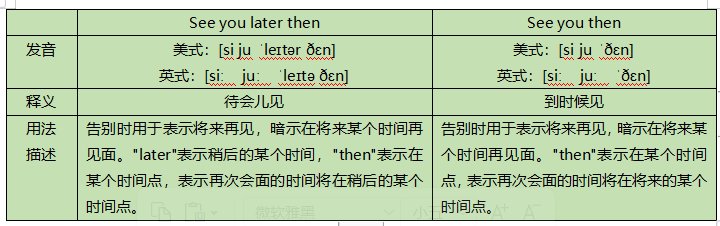
"See you later then" 表示在将来某个更晚的时间再见面,多用于非正式场合,离别时常与好友或亲密关系的人使用。"See you then" 表示在约定的时间再见面,可用于各种场合,与任何人使用。它们在释义、用法、使用环境、影响范围和形象上存在一些区别,具体内容如下所示。
1. 释义区别:
"See you later then":意思是“那时再见”,表示将来某个更晚的时间再见面。
"See you then":意思是“到时见”,表示在约定的时间再见面。
例句:
A: I have to go now. See you later then!
(我现在得走了。那时再见!)
B: Okay, see you then!
(好的,到时见!)
2. 语法区别:
"See you later then":是将时间副词"later"放在动词"see"之后,然后使用副词"then"来引出下一句。
"See you then":直接使用副词"then"来引出下一句。
例句:
A: I have an appointment now. See you later then, okay?
(我现在有个约会。那时再见,好吗?)
B: Sure, see you then!
(当然,到时见!)
3. 用法区别:
"See you later then":通常在离别时或临别前使用,表示在某个更晚的时间再见。
"See you then":通常用于约定某个未来的时间,表示在约定的时间再见。
例句:
A: I'll be working late today. See you later then.
(我今天要工作得很晚,那时再见。)
B: No problem. See you then at 8 o'clock.
(没问题。到时候8点见。)
4. 使用环境区别:
"See you later then":常用于与好友、亲密关系的人或非正式场合下。
"See you then":更通用,可以用于与任何人、任何场合下。
例句:
A: I need to run some errands, see you later then!
(我需要办点事,那时再见!)
B: Alright, see you then.
(好的,到时见。)